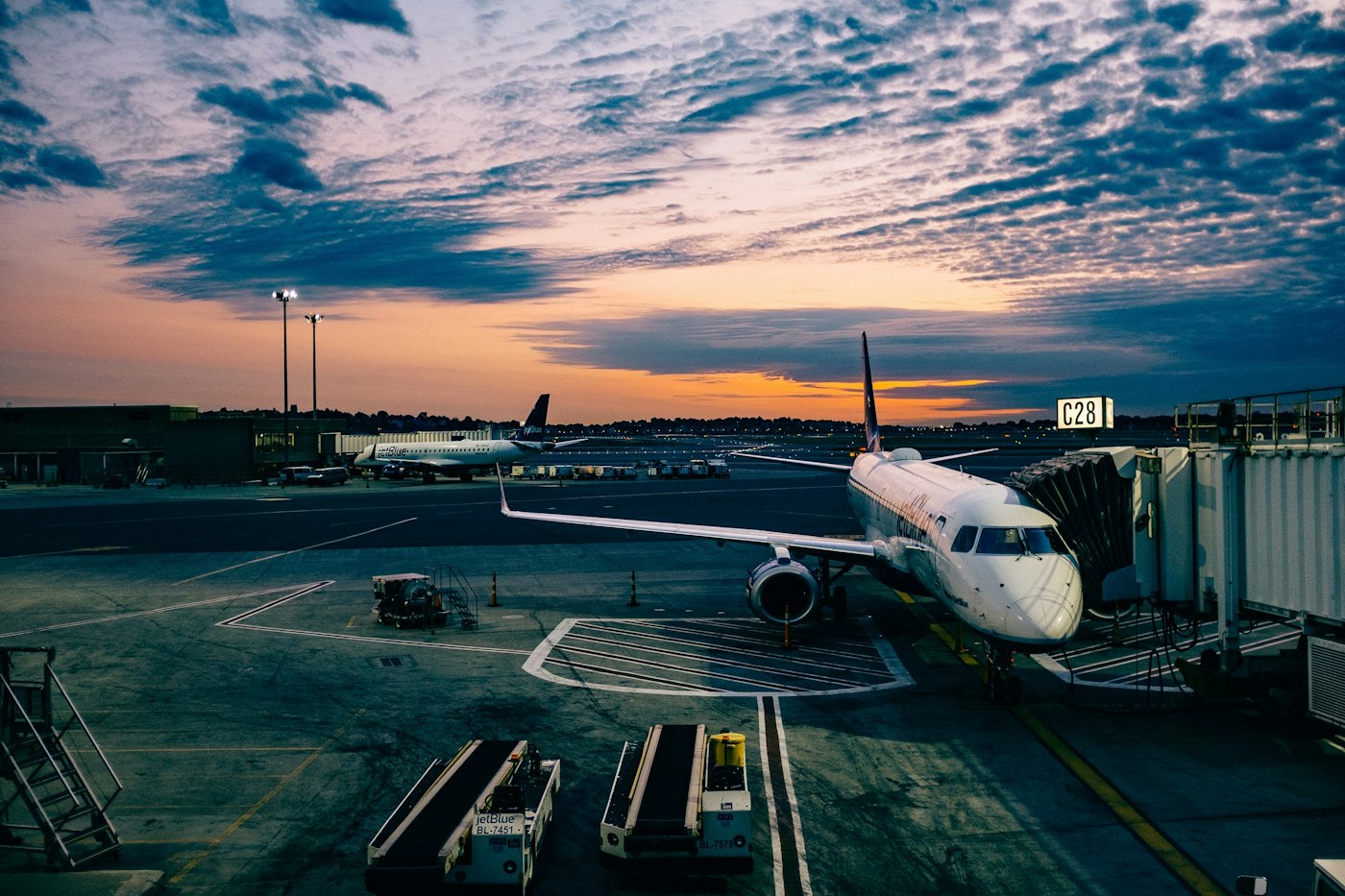
It’s not often I fancy myself the saviour of the antipodes but, standing at Sydney’s Kingsford Smith International Airport waiting to board flight VS201, I am acutely aware of the solemn responsibility entrusted to me. My mission – code named The Green Challenge within the Travel + Leisure bunker – requires me to make the familiar pilgrimage from Australia to the UK in the most environmentally responsible way possible. In preparation for the task I have researched transport options, sought out climate-friendly hotels and restaurants, and plotted a low-impact itinerary. The idea is to do all the things the average Australian or New Zealander would normally do on holiday in England – endure a punishing flight there, catch up with friends, eat out, shop, complain about the weather – and constantly monitor the environmental consequences of each activity. To that end, my actions were carbon-audited by the University of Sydney’s Centre for Integrated Sustainability Analysis (see breakout) to provide a clearer understanding of their relative impacts.
Why go to so much trouble? Because Australia and New Zealand have been getting a bad rap lately. As global concerns mount over climate change, travelling to or from distant destinations like ours is being portrayed in the northern hemisphere as irresponsible, even unethical. In an article last year, headed “Is it OK to fly to New Zealand for a holiday?”, Guardian newsppaper columnist Richard Hammond informed his readers that the carbon dioxide emissions from one return flight to Auckland was equivalent to 60 train holidays to Scotland. In eco-conscious Europe, such comparisons can be damning.
Tourism New Zealand chief George Hickton conceded as much last year when he said his organisation was closely monitoring consumer sentiment abroad, “particularly in the United Kingdom, our second largest market, where concern over the sustainability issue is growing”. Likewise in Australia, the Department of Industry, Tourism and Resources has announced a study into the climate change concerns of Britons and Germans, two of the country’s largest visitor groups.
Flights longer than 1500 kilometres account for about 80 per cent of all carbon emissions from air travel according to the Dutch airline KLM; jet exhaust, in turn, accounts for about 3 per cent of global emissions. That sounds meagre but the scientific consensus is that gases released at altitude have a more devastating impact than ground-level pollution. Furthermore, the Intergovernmental Panel on Climate Change forecasts aviation’s contribution to global carbon emissions will have risen fivefold to 15 per cent by 2050.
It is a potentially catastrophic equation in which we, being so far removed from the rest of the world, play an exaggerated role. The critical issue is not only whether foreign tourists will continue to visit our shores, but also whether we should continue to visit theirs. As Michael Specter wrote in The New Yorker last year, “Possessing an excessive carbon footprint is rapidly becoming the modern equivalent of wearing a scarlet letter.” We could well become the pariahs of the environment lobby simply because of where we were born.
In an era of eco-consciousness, long-haul journeys are considered by some a carbon no-no. But a traveller’s smaller, softer footprints can make a world of difference. Travel + Leisure took the classic Kangaroo Route from Sydney to London to gauge if it’s possible to make it in an environmentally responsible way.
Hence this exercise. Think of it more as a traveller with his eyes open to the possibilities for positive change, rather than a forensic examination of how to address the global warming impacts of long-haul travel. The practical options for responsible travel are still so embryonic that the latter approach proved impossible. But there are ways to reduce our carbon footprint when travelling, and awareness is the first step.For example, I had no choice but to fly though I tried to be responsible in my choice of carrier. I chose Virgin Atlantic because it appears the most advanced in its consideration of alternative fuels. Few airlines have grasped the nettle of greenhouse gas abatement but there are a handful of well-intentioned pioneers: Air New Zealand has announced test flights with aircraft maker Boeing using plant oils, Boeing has done a test flight with a hydrogen cell-powered plane and Cambridge University is helping British Airways analyse emissions from its aircraft.
But Virgin took the eco-lead last February on a 747 flight from London to Amsterdam powered, in part, by a mix of coconut and Brazilian babassu oils. The innovative product comprised only 20 per cent of the plane’s fuel – the remaining 80 per cent was traditional kerosene – but it was an admirable (and typically well-publicised) step in the right direction.
My flights, however, were powered by conventional, carbon-intensive fuels. Currently the only option to counter the damage caused by air travel is to invest in a high-quality carbon offset scheme says Dr Christopher Dey, senior research fellow at the Centre for Integrated Sustainability Analysis. These schemes fund renewable energy projects, hence reducing overall carbon levels in the atmosphere. “I think carbon offsets are a real alternative,” he says. “And for Australians, they are the only alternative.”
I agonised briefly over packing – thinking an ultra-light suitcase would save on emissions – but was reassured by Dr Dey that whether my bags weighed 10 or 20 kilograms was not significant. “It doesn’t make that much difference. At the moment you can’t really make a very detailed estimate of any emissions differences associated with different types of luggage,” he says, because there is not sufficient data from airlines on the subject. “Air travel is still the main factor.”
On arrival in the British capital I bought an Oyster card for £3 ($7), partly to be green and partly because it is such a pleasure to use an intelligent smart-card system on public transport (hello? Sydney?). I pumped it up with £20 ($45) and then travelled to Kings Cross-St Pancras before jumping on the Circle line to Farringdon.
Destination: the Zetter hotel in Clerkenwell. Bolthole of the uber-cool but, more importantly, one of the few London hotels with environmental credentials. These include the recycled materials used in the conversion of this 19th-century building into a fashionable hotel, a naturally ventilated atrium filled with daylight and the bore 130 metres below ground that powers the Zetter’s heating and greywater. The water is also purified for mains and bottled drinking water. I liked the concept of the hotel, but the execution left a bit to be desired (a bit of friendly, efficient service wouldn’t go astray). Still, I earned greenie points by staying there – Dr Dey estimates the Zetter uses 25 per cent less energy than conventional hotels.
Once checked in I went in search of a decent coffee and, miraculously, found one immediately. Coffee@Goswell Road brews java using only shade-grown, fair-trade, rainforest-friendly and organic beans. Who knew coffee could be so politically correct without being totally emasculated? It’s a minor example but it does show that a) it’s possible to be kind to the earth without sacrificing our favourite vices, and b) if you are really committed you’ll find a solution.
And the Goswell guys seem very committed. All foodstuff for sale, from potato chips to sesame oil noodle lunch packs, are organic. Every conceivable waste product is recycled and even the lampshades, knobbly white designer orbs that ooze Italian style, are made from paper shot-cups.
At first flush, London was looking decidedly more progressive on the environment front than Australia. There were examples everywhere of people taking decisive action. During my visit, the supermarket giant Tesco was introducing carbon labelling on its products so shoppers could count carbon emissions in the same way they already count calories or fat. I stumbled across the Skanska building site in St Barts and found a billboard proclaiming that Skanska had so far recycled 12,177 tonnes of demolition waste. (That’s equivalent to 1617 red Routemaster buses, in case you were wondering.)
It surprised me that earth- and people-friendly movements such as organics, recycling and fair trade were so much more ingrained in London than in Australian cities. I assumed that, being blessed with our natural environment, we would be more inclined to treasure it. Perhaps the sheer size of the city and its lack of the natural attributes we take for granted spur Londoners to preserve, and hopefully build on, what little amenity they have.
The morning began with a quick dash over the Thames to chat with Peter Lockley, head of transport policy at the World Wide Fund for Nature. Lockley works with the WWF’s climate change team campaigning against the British government’s decision to expand more than 30 national airports and encouraging corporations to reduce business flights in favour of earth-friendly alternatives such as video-conferencing. Britons fly more than any other nationality, and one-fifth of all the world’s flights go via the UK. While he concedes airlines have made some headway in curbing their emissions, Lockley says it is nowhere near enough to counter the expected 5-6 per cent growth in flights.
Lockley himself has not flown for four years, a feat made possible by excellent rail and ferry links to Europe and abstinence from long-haul holidays. The slightly cheering news for we environmental vandals on the far side of the world is that the WWF’s sights are more keenly focused on the impact of flights within Europe.
“People have got the message that short-haul flights are more damaging per kilometre,” he says, referring to the relative amounts of carbon dioxide and other noxious gases emitted. “You can get 20 return flights to Paris for one return flight to Australia.”
From the WWF office I walked back to the hotel then taxied to the Water House Restaurant in Shoreditch for lunch. There is public transport, true, but I had no idea where to catch the bus.
People come to the Water House not simply for its aspect beside the Regent’s Canal but also because it is a model of green efficiency. Water from the canal fuels its cooling system, rooftop solar panels provide hot water, the kitchen runs on renewable hydroelectricity, and it produces its own premium filtered water on site. There is a worm farm for food scraps and a composter for garden waste. Almost 50 per cent of its profits are also recycled, ploughed back into the disadvantaged local community under the auspices of the Shoreditch Trust, which owns both the Water House and its eco-friendly predecessor Acorn House near King’s Cross.
Since opening in February the restaurant has garnered rave reviews and tapped into the London Zeitgeist for all things earth-friendly. By dining on sustainable prawns from France, locally produced vegetables and herbs grown in pots beside the canal, my greenie rating soared. Dr Dey reckoned the Water House produces just 25 per cent of the carbon emissions of a normal restaurant.
A metropolis such as London has something for everyone, even journalists taking the first tentative steps towards addressing their carbon footprint. So I headed for the Science Museum in South Kensington to view its temporary exhibit titled Does flying cost the earth?
To reach the exhibit I had to pass through a display on industrialisation and technology that featured prototype trains and cars and historical displays of the Industrial Town (1820-1880), the Second Industrial Revolution (1870-1914) and The Age of Man (1914-1939).
Life during the Industrial Revolution was illustrated by a drawing of a grim-looking town and a passage from Charles Dickens’ Hard Times (1854): “Coketown … was a town of machinery and tall chimneys … It had a black canal in it, and a river that ran purple with ill-smelling dye, and vast piles of buildings full of windows where there was a rattling and a trembling all day long.”
The passage and the picture made me ponder the progress we have already made in putting human health and amenity above industrial expansion at any cost. With commitment – and 150 years – we have been able to reverse the worst excesses of mass industrialisation. I wonder if, in another 150 years time, visitors to the Science Museum will find an equally anachronistic exhibition of the dire state of the world at the start of the 21st century.
The display on the impact of aviation was comparatively bland. I learned that the number of planes is expected to double to 28,000 by 2026, and that we are far from having a viable alternative to the noxious substances that fuel our holidays.
From South Kensington I headed to Hyde Park to stay with a friend, Mrs M, at her elegant garden apartment. She belongs to the Bulldog Club, an association of up-market B&B operators who take paying guests into their ritzy London homes. I hoped that staying in a private home would be far better for the environment than a night in a hotel, and Dr Dey seemed to agree. He said the fact that we were sharing more common resources – rooms, power and so on – probably meant staying in private homes produced lower carbon impacts per individual. His analysis didn’t take into account the martinis and smoked salmon we consumed for lunch, of course.
In the evening I took the Tube to Piccadilly Circus to catch a comedy night at some place called The Amused Moose, which was dire. Afterwards we ate at Mayfair burger joint Automat, where singer Lily Allen and a gang of rowdy mates were toasting her little brother Alfie’s success as a naked horse stabber in the West End show Equus. Environmental kudos – 0/10. Celeb spotting kudos – 2.5/10.
It’s not easy being green when rail maintenance work and my own unfamiliarity with the destination conspire to thwart climate-friendly intentions. So while I managed to catch a bus from Hyde Park to have coffee with a friend at Victoria, I couldn’t find that same bus to get home again and had to catch a cab. Later, I found half the underground network closed for repairs and again was forced to take a cab to my next hotel at Tower Bridge.
The Apex City of London hotel is a block from the Thames, has views of the Tower of London and is cheap – rooms start from £65 ($145). But these are not the only reasons I booked a room there.
The Apex chain is also serious about limiting its carbon emissions; it has a full-time environmental director, a part-time architect of sustainable design and a “Green Team” of employees who constantly identify new ways to conserve energy use. As a result, Apex properties are gradually being transformed into models of efficiency; all lamps are powered by low-emitting diodes, produce is sustainable wherever possible, boilers are set to optimum production and glass and newspapers are recycled.
“We analyse everything that happens from a consumer perspective, every time someone turns on a light or flushes a toilet,” says Apex’s environmental director, Jo Harbisher. “Our ultimate goal is to reduce consumption and carbon dioxide emissions as much as possible.”
They are clearly heading in the right direction – the University of Sydney analysis suggests my stay at Apex produced just 75 per cent of the carbon emissions of an average hotel stay.
For my final tilt at enviro-responsibility I met two friends for dinner at a Kings Cross gastropub, Konstam at the Prince Albert. The interior is painted a deep, forest green but that’s the only hint that this candle-lit dining room is doing its bit.
In the open kitchen beside our table, 85 per cent of the food being sizzled, sealed, dressed and doled out is sourced within the limits of the London Tube system. The rabbit in the rabbit, bacon and apple rissoles, for example, comes from Amersham in North London, as does the seared pigeon breast that’s served with roasted beetroot. There are carrots from Brick Lane, beer from Greenwich, beef from Harefield and a host of other delicious foods you never knew were available so close to the capital.
Dinner wasn’t cheap – the bill for three came to £110 ($250) – but it was the best food I ate in London, and the carbon discount was worth it. Dr Dey found that our feast produced just half the carbon footprint of a comparable meal in a standard eatery.
Such comparisons may seem trivial in the face of global warming. But think of them as the first step forward, an attempt to quantify the impact of our everyday actions.
Once that impact is acknowledged there are a range of options to redress the environmental damage of your actions. Given the overwhelming evidence we now have that our actions are harming the earth, doing nothing is no longer one of these options.