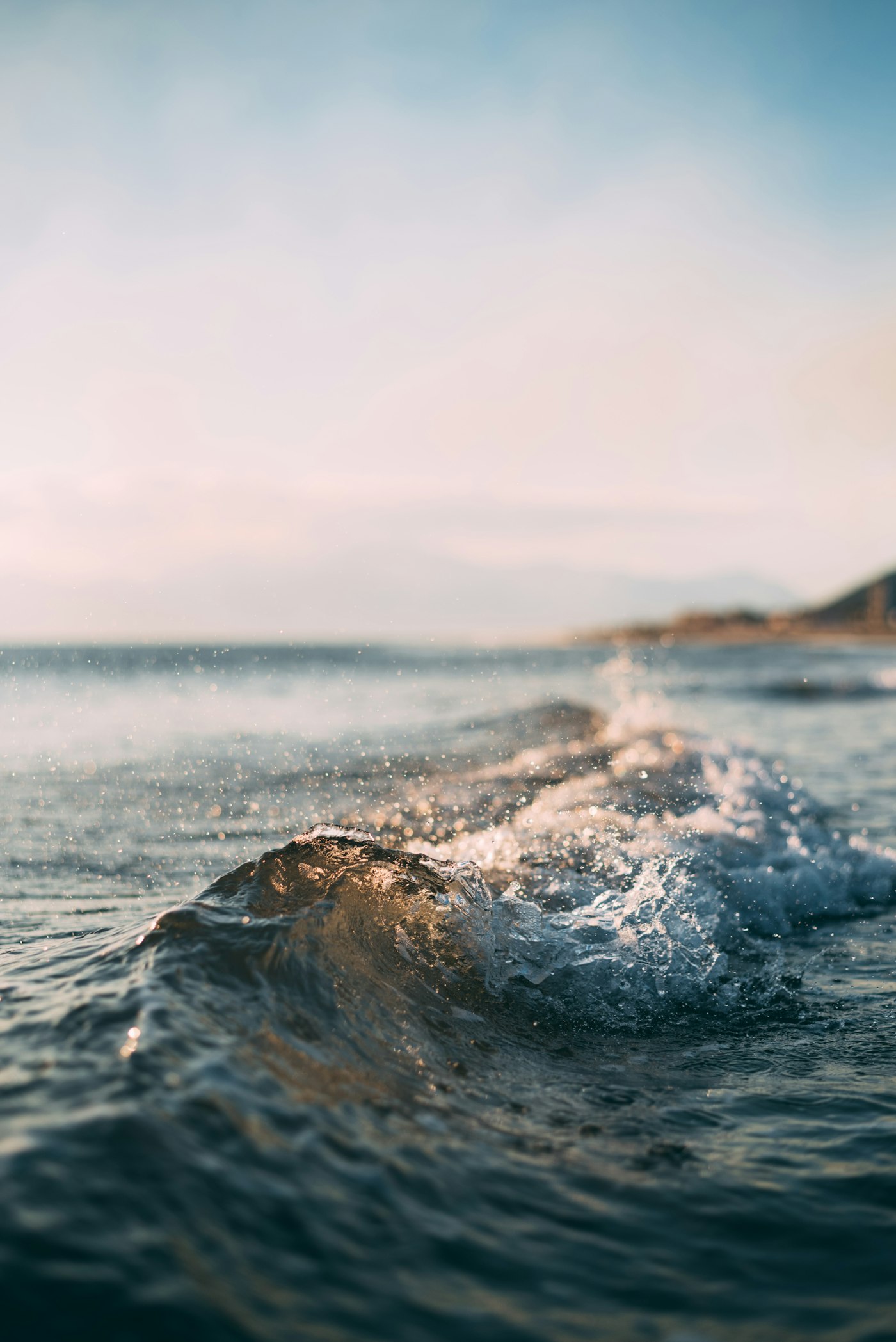
Floating off the north-east coast of Sicily like a bunch of naughty children who have strayed too far from their mother, the Aeolian Islands owe much to their isolation, preserving them, largely, from the ravages of tourism. But, as is the case on their motherland, family and tradition are always close at hand.
The islands (also known as the Lipari islands) got their name from ancient Greek mythology. Aeolus was the god of the winds, and he was said to keep his winds imprisoned in the islands’ caves. The seven islands of Lipari, Salina, Stromboli, Vulcano, Panarea, Alicudi and Filicudi are all remnants of volcanoes formed millennia ago, but only Stromboli is active now.
Of course, all can be reached within a few hours by ferry or hydrofoil from the mainland, but there’s no substitute for sailing around their majestic coastlines, even though Aeolus may still occasionally keep his winds under lock and key.
DAY 1 Sant’Agata di Militello to Lipari, 34 nautical miles
Giuseppe is waiting for us at the marina, greeting us like long-lost friends. The welcome denotes a naturally friendly disposition but also correlates with the fact that he has convinced the pair of us to charter an eight-berth, 44-foot yacht from Kiriacoulis Mediterranean (kiriacoulis.com; $3800 per week). The boat is roughly the size of our flat in Australia. In perfect English, but with an accent as creamy as mascarpone, Giuseppe methodically takes us through an inventory of Volaris II, our seagoing home for the next five days. For the journey, we procure possibly the world’s finest prosciutto, parmigiano and buffalo mozzarella from an old lady out the back of a mini-mart.
Underway, in the misty distance we can barely make out three humps: Vulcano, Lipari and Salina. Six hours later (the wind is having a siesta today) we are skirting the bases of these rugged, rocky beauties from the iridescent sea, which derives its pale blue-green hue from the tonnes of pumice dust spewed out of the volcanoes. Taking the scenic route along Bocche di Vulcano, the 800-metre-wide channel separating Lipari from Vulcano, we’re overwhelmed by the islands’ majesty – and by the pungent smell of sulphur.
A quartet of Aeolians greet us at Lipari’s floating pontoon Porto Salvo (Marina Lunga; +368 719 0843; overnight moorings from $45). Despite our diligent “parking” preparations, we muddle our attempts to throw the lines according to the local style. The largest island in the archipelago, Lipari is dominated by its Mediterranean-style main town whose population is inflated by day-trippers from mid-morning until dusk.
Even after sundown, the relative tranquillity is pierced by the sound of endless Vespas buzzing by, so for dinner we repair to the smaller fishing village of Canneto (two nautical miles from Lipari town).
Our tender gets its first run up to the beach – a strip of sand artfully littered with all manner of fishing boats and overlooked by a handful of trattorie. At La Bussola (Via Marina Garibaldi; +39 090 988 0881; www.ristorantelabussola.com; dinner for two $80) our swordfish carpaccio is testament to the abundance of this species around the islands. It’s tempting to call it the best seafood we’ve ever tasted, but then we try the gamberetti (baby prawns), tossed in garlic, olive oil and basil. These plump, sweet morsels are sublime.
DAY 2 Lipari to Panarea, 12 nautical miles
We disembark early in search of sustenance fit for a day of sailing and swimming. After boat tours, scooter hire and seafood, Lipari’s most lucrative tourist enterprise must be selling snorkels and flippers. We stop in at Navalpesca (97 Via Francesco Crispi; +39 090 981 2422; mask and fin sets from $40) and make the obligatory investment. Along the waterfront, fishermen fillet the day’s catch (mostly swordfish) on open-air workbenches, leaving stacks of “swords” poking out of garbage bins like discarded medieval weaponry.
At Torrefazione Caffeteria (237 Corso Vittorio Emanuele; +39 090 981 1212) we’re revived by an exemplary version of the short black shot. Directly opposite, Anna Maria holds court over La Formagella (250 Via Vittorio Emanuele; +39 090 988 0759) a delicatessen heaving with fresh and preserved local produce. She sells us fat, overripe figs and basil plucked from her own garden; pesche tabacchieri (misshapen “snuffbox” peaches), fresh ricotta and a generous scoop from what she calls “the most important plate in the shop” – the islands’ legendary capers, marinated in chilli, garlic and olive oil. They’re utterly delicious thanks to the quality of the ingredients.
Back aboard the boat, we sail four nautical miles northwards along the coast then drop anchor near Porticello. The sea is so clear we could be convinced it’s really potable water; the beach consists of fist-sized pebbles of various types of volcanic rock.
After lunch, we set a course to Panarea. The wind is capricious, picking us up and letting us down like a local Lothario, but eventually it delivers us to the prettiest and most elite of the islands.
We spot the hibiscus-clad, whitewashed holiday houses of wealthy Italians clutching the escarpment as we make our way past Cala Junco, a prehistoric cove now colonised by deckchairs and a gelato bar.
We carefully navigate our way around Le Formiche (“the ants”), a group of rocks that barely pokes above the sea surface. Further along the coast, the harbour at San Pietro is remarkably tiny. A sleepy cluster of bars congregates along Contrada San Pietro.
With a population of a few hundred residents and a ban on all vehicles, Panarea is determinedly lethargic.
We take one of its circuitous pathways and amble past shady courtyards hedged with prickly pear on our way to the Bronze Age village of Punta Milazzese. But our (admittedly lukewarm) attempts at finding it are thwarted by pathways that conspiratorially lead us to the Hotel Raya (Via San Pietro; +39 090 983 013; hotelraya.it; doubles from $315), the island’s hippest hotel. We surrender to its expansive terrace, where a Cafe del Mar soundtrack plays as barefoot waiters attend tanned holidaymakers. Relaxing in deckchairs, we order Campari and orange – which mimics the colour of the sun as it sets behind Stromboli.
DAY 3 Panarea – Stromboli – Salina, 33 nautical miles
Although the tiny isles of Basiluzzo, Datillo and Lisca Bianca are connected to Panarea by a three-kilometre underwater platform, I prefer the view that they were unpleasant morsels spat out of the volcano’s mouth with violent distaste. Still, the craggy-faced isles are staggering beautiful, with shallow aquamarine pools collecting around their bases as water darts in and out of their caves. We grab our snorkels and congratulate ourselves on our foresight.
As the afternoon sun merges the blues of sky and sea, the breeze pulls us towards the most famous Aeolian isle. The muse of poets, philosophers and trekkers, Stromboli is the wild and woolly black sheep of the family. Brochures and guidebooks insist it is permanently active, but after 200 uninterrupted years breathing fire, it seems to be taking a nap while we visit.
With nowhere to safely anchor, we circumnavigate it. Even dormant, the volcano’s majesty is breathtaking. Rocky valleys rendered like still-life landslides provide an inkling of how the almighty force of this beast can be turned on and off at will. At the village of Ginostra, we see the inevitable stalls selling “genuine” pieces of the inferno and watch wiry hikers prepare for the three-hour trek to the 610-metre peak. More sensible visitors sip aperitifs, reminding us that dinnertime is nigh.
So we motor in the direction of Salina. Since ancient times, Salina’s twin peaks have struck men as giant breasts rising from the sea. The metaphor may have merit – unlike its angular, barren sisters, it is verdant, with motherly, fleshy folds and agricultural wealth.
We’re instinctively drawn to the cacophony emanating from Ristorante Porto Bello (Lungomare Giuffre; +39 090 984 3125; dinner for two $120). It’s 10pm and everyone has just tucked into antipasti – a fair indication we’re in local company. Delicious linguine with prawns, zucchini and pistachio is as sublime as the pan-fried tuna with aromatic herbs.
Salina’s scattered attractions inspire us to do what everybody else is doing: hire a scooter. We aspire to re-enact a scene from1994’s Il Postino (which was filmed on the island), but this is scrapped when we arrive at Noleggio Bongiorno (240 Via Risorgimento, +39 090 984 3409; www.noleggiobongiorno.it, scooter hire from $45 per day). Our lime green 80cc scooter has the power and aesthetics of a second-hand lawnmower, but it carries us around hairpin turns, through the tiny hamlet of Malfa and delivers us to the astonishingly beautiful Spiaggia di Pollara, where we take a steep pathway down to the bay. A collection of rocks are the perfect jumping-off point to dive into the pristine sea; ancient fishermen’s caves are ideal for storing towels. Back on the bike, we pass orchards, caper plantations and vineyards – every surface is cloaked in green. We pass lovely old doors with peeling gelato-coloured paint and villages with little more than a postbox. We see old signs advertising Malvasia, the syrupy, yellow-tinged local white wine grown and fermented almost exclusively in Salina. A bakery called “The Bread of Love” captures the romantic spirit.
We arrive at Lingua, on the south-eastern side of the island, in time to witness a local wedding. At the end of a promenade lined with restaurants and cafes including Da Alfredo (5 Via Lungomare; +39 090 984 3075; granita, $3), a tiny bar selling arguably the world’s finest granita, a crowd waits for the bride, who emerges from the mist aboard a fishing boat.
DAY 5 Salina to Vulcano, 2 nautical miles
The namesake for exploding mountains everywhere, Vulcano is as earthy and smelly as you might imagine. We sail into the pretty, busy, harbour of Porto di Ponente, a fine black-sand beach, and drop anchor before coming ashore to join the throng making their way towards Fanghi, the island’s famous mud baths.
These “baths” are as underwhelming as they are entertaining. A stinky, bubbling pond the size of a children’s wading pool is filled with waddling bodies, but the swimmers aren’t toddlers; they’re mostly retirees with rheumatism who are coating their generous folds with volcanic nutrients. Gingerly, we wade in and follow suit. Afterwards, our skin does feel remarkably smooth – even if for the next two days it emits a rotten-egg perfume.
In the evening, a 10-minute walk inland brings us to Ristorante Vincenzo (25 Via Porto Levante; +39 090 985 2016, dinner for two $80) where we scoff plates of pasta con la sarde, a peasant dish that combines sardines with sweet raisins and wine.
We return to the harbour to find our boat is getting a little too well-acquainted with the nearby rocky outcrop, so in the darkness we re-anchor closer to shore, where the gentle breeze rocks us to sleep.
A loud rap on our deck awakens us the following morning, and we crack open the hatch to spy a boy no older than nine peering in. “You’re too close to the beach,” he reports. It’s tempting to take the Sicilian option (tell him to go back home to his mother) but we have our own motherland to return to, so we set sail for the last few tacks back to Sant’Agata di Militello.