-
National Stadium The 90,000-seat stadium, nicknamed the “Birds Nest” (due to its cross-stitch steel and concrete exterior), like most of the Beijing venues, is designed by foreign architects. Take a taxi and a guide to near Olympic Green for a view of this amazing building conceived by Swiss architects, Herzog & de Meuron.
-
National Aquatic Centre The 17,000-seat Australian-designed, National Aquatic Centre, dubbed the “Watercube”, is set to become the most recognised Olympic venue after the main stadium. Described as a celebration of transparency, this building is inspired by the molecular structure of crystal cells. Spectacular by night when fully illuminated.
-
CCTV Tower One of the most amazing new building designs in the world – second only to the Pentagon in size – is gradually rising to a height of 230 metres in central Beijing. Dutch-designed, the massive, horizontal and vertically looped building will be the lavish new headquarters of China’s national broadcaster.
-
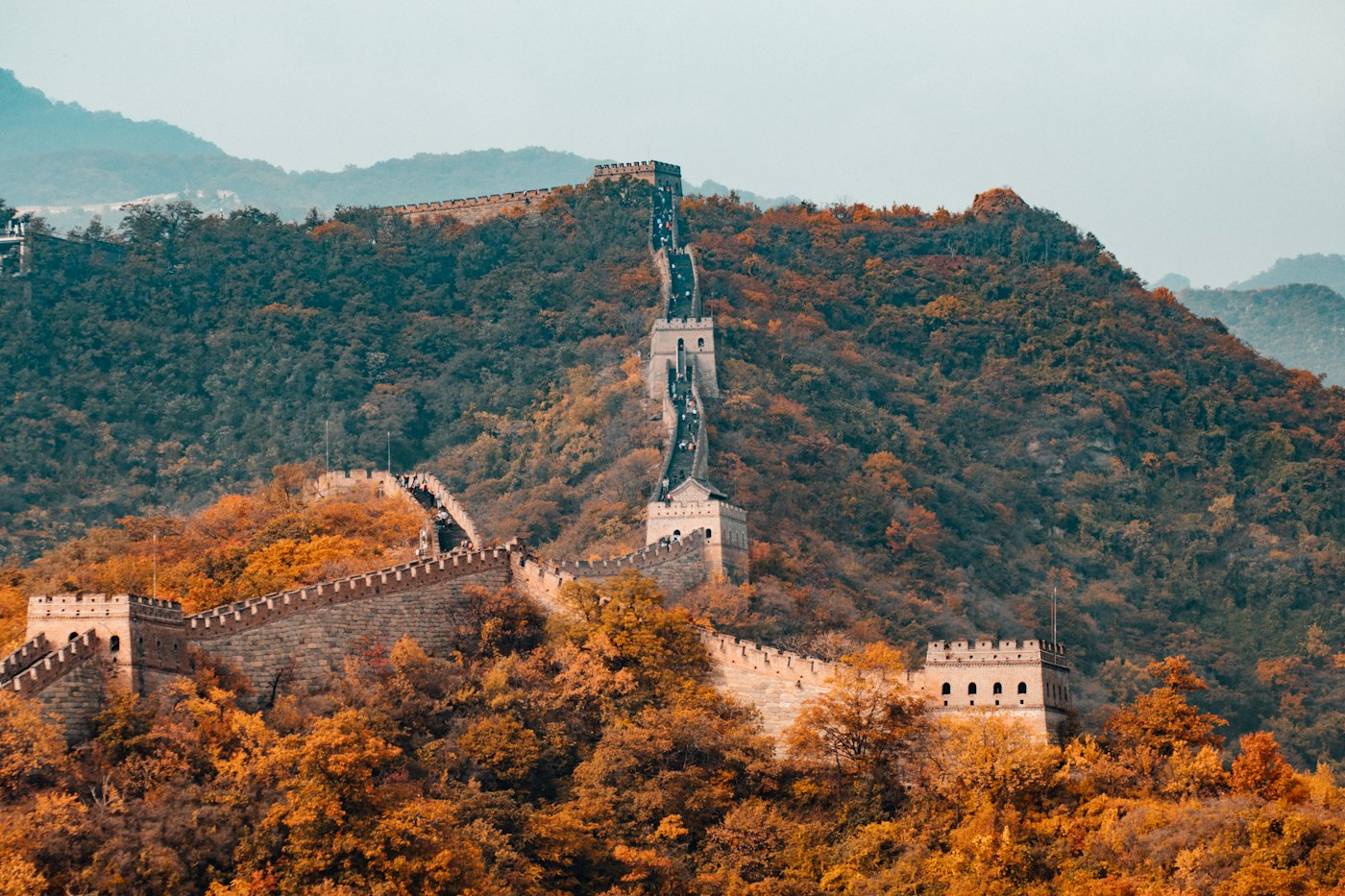
Commune by the Great Wall This unique hotel complex at Badaling, an hour or so from Beijing, began as a series of radical villas designed by a dozen or so of Asia’s top architects. The complex is now a fully-operational luxury hotel resort with the Great Wall conveniently running through its private compound.
-
National Centre for the Performing Arts One of the most controversial pieces of Beijing’s modern new architecture, the French-designed building, which resembles a massive splattered steel egg, is wedged – some think insensitively - between Tiananmen Square and the Forbidden City.
-
798 Dashanzi Arts District Located on the site of an old electronics factory that’s been transformed into a network of galleries, studios and cafes, this unique, almost organic arts district has emerged as the must-see focal point for Beijing’s artist community.
-
Ullens Centre for Contemporary Art Housed in an 8000-square-metre Bauhaus-style factory (also in the Dashanzi district) this is Beijing’s latest centre for contemporary Chinese art. Three exhibition halls will show cutting-edge contemporary Chinese art while an education program will bring visitors closer to the artists themselves.
-
Red Gate Gallery An expatriate Australian, Brian Wallace, with a passion for Chinese modern art, founded this leading gallery, based in Beijing’s historic Watchtower building. Each year the gallery hosts as many as eight solo contemporary art shows. Wallace, a long-time Beijing resident, was at the forefront of the current intense world interest in Chinese art. There is now a second Red Gate Gallery at the 798 Dashanzi Arts District across town.
-
Beijing Capital International Airport Just in time for the Olympics comes Asia’s latest mega-airport, and yet another designed by British architect Sir Norman Foster (who was responsible for Hong Kong’s marvel). The airport’s terminal is housed in the world’s biggest airport building and is designed to resemble the form of a dragon. Airport slogan: “Harmonious Airport: Dreams start from here”.
-
Houhai Lake Although an older area of central Beijing, what with its proliferation of hutongs (distinctive ancient laneway communities that feature communal courtyard houses) this area also represents the modern, hip and lively face of the capital. Here you’ll find a range of restaurants, bars and cafes some of them right on the waterfront.
This quirky image by T+L reader Jackie Laws is the winner of the Travel + Leisure/Sony travel photography competition. More than 500 entries were received; a selection can be viewed in the Photoprize Gallery.